Planning an outdoor room in Nipomo can feel tricky. The afternoon breeze is part of the charm, but it can flip a light awning and rust cheap fixtures in a season. If you own a second home or you’re prepping to sell, you want a space that’s comfortable most of the year, easy to care for, and appealing to buyers. This guide walks you through shade, wind, materials, planting, lighting, permits, and maintenance so your outdoor room fits Nipomo’s coastal climate and supports your goals. Let’s dive in.
Nipomo’s coastal conditions
Nipomo sits on California’s Central Coast with a Mediterranean coastal climate. You get mild temperatures throughout the year, cool mornings from the marine layer, and a regular afternoon onshore breeze on many days. Winter brings most of the rain. Summer is mostly dry.
These patterns shape outdoor design. You still need solid shade for summer afternoons. Wind exposure means lightweight shade devices can struggle without proper support. Salt in the air increases corrosion risk for metal hardware and fixtures, so materials matter. Drought conditions favor efficient irrigation and low‑water plants. In parts of San Luis Obispo County, fire‑wise choices may be required. Local codes also set wind and seismic standards for any structure you build.
Plan shade that works all year
Permanent or adjustable cover
- Solid roofs offer rain protection and dependable shade, which supports year‑round use. They are heavier, need footings and permits, and must meet wind and seismic criteria.
- Pergolas with open or slatted tops give filtered shade and airflow. You can add retractable canopies or shade cloth when summer sun intensifies.
- Motorized louvered roofs let you switch between sun and shade, and they shed rain when closed. They cost more and require mechanical upkeep, but they provide excellent flexibility.
- Retractable awnings add shade without a full structure. Use wind sensors and a clear retraction plan, because sustained winds can damage them.
- Shade sails look light and can be economical. In exposed areas, they put high loads on anchor points and need engineering or routine takedown. They are best on sheltered sites or as seasonal solutions.
Placement and orientation
Place your primary shade where it blocks strong midday and afternoon sun. Keep view corridors open on leeward sides, and add partial wind screens on windward edges. You can pair a pergola or louvered roof with side screens so you block wind without losing light.
Wind‑friendly enclosures
- Tempered glass or laminated acrylic panels can create a calm, sun‑warmed nook. Plan for structural support and water management.
- Perforated metal or slatted wood screens filter wind while preserving light and some visibility.
- Vertical retractable screens give you close‑on‑windy, open‑on‑calm flexibility.
- Dense evergreen hedges offer a softer windbreak. Combine hard and soft elements to tune airflow and privacy.
Choose coastal‑tough materials
Fasteners and connectors
Use corrosion‑resistant hardware. In coastal exposure, marine‑grade stainless steel (316) is recommended. Hot‑dip galvanized can be acceptable farther from salt exposure but will corrode faster near the coast. Avoid mixing dissimilar metals that can create galvanic corrosion.
Decking that lasts
- Composite or capped polymer decking is low maintenance, resists rot and insects, and appeals to second‑home buyers who prefer less upkeep. Choose products rated for UV and salt exposure.
- Tropical hardwoods like ipe are naturally durable. They cost more and need periodic oiling if you want to keep the rich color. Verify sourcing and plan for acclimation before installation.
- Pressure‑treated lumber is economical but needs regular staining and sealing. Expect checking and splinters over time.
- Aluminum or marine‑grade metal decking is noncombustible and very durable with low maintenance. It can cost more and has a different underfoot feel.
Frames and finishes
Powder‑coated aluminum and stainless steel frames provide excellent corrosion resistance with less maintenance. Redwood and cedar are attractive and decay resistant with proper sealing, but you should plan for routine inspection and refinishing in a salt‑air setting. Use powder coatings, marine coatings, and UV‑stable stains per manufacturer schedules.
Fabrics and upholstery
Choose marine‑grade, solution‑dyed acrylic or polyester for cushions, awnings, and screens. These fabrics resist UV, mildew, and salt better than standard options.
Fire‑resistant choices
If your parcel sits within a wildland‑urban interface, favor noncombustible or ignition‑resistant materials for structures and finishes. Keep defensible space in mind when placing plants, furniture, and features near buildings.
Landscape for wind, water, and views
Planting goals
Good planting supports your outdoor room by filtering wind, protecting privacy, and framing views. Favor drought‑tolerant, coastal and native species so irrigation stays low and plants thrive in local soils.
Plant ideas for the Central Coast
- Low shrubs and hedges that filter wind: Artemisia, Salvia, coast buckwheat, dwarf manzanita.
- Taller windbreaks in staggered layers: toyon, native oaks in less salt‑exposed spots, and Monterey cypress where protected.
- Grasses and perennials for movement and pollinators: Festuca, Carex, muhly grass, and ceanothus.
- Succulents and accents that handle salt and low water: agave, aeoniums, sedum.
Irrigation and soil
Group plants by water needs and use high‑efficiency drip irrigation. Mulch to cut evaporation. In compacted coastal soils, add amendments and confirm drainage to prevent root issues in sensitive species.
Firewise touches
Keep low‑fuel plantings near structures. Trim and clear regularly to maintain defensible space. Select lower‑sap, less resinous species close to decks and buildings.
Lighting and comfort systems
Lighting that feels good at night
Use warm 2700–3000K light for a welcoming glow. Select LED fixtures rated for wet locations with corrosion‑resistant finishes. Combine step lighting for safety, low‑glare path lights, wall sconces for general light, and gentle downlighting from pergolas for tasks. Add dimmers, timers, and motion sensors to balance ambiance and energy use. Solar accents can supplement, but performance varies with cloud cover and marine layer.
Power and safety
Exterior circuits should be GFCI protected and installed to code. Outdoor kitchens, heaters, and hot tubs often need permits and certified installers. Plan electrical early so conduit and switching are clean and hidden.
Heating and fire features
Electric infrared or direct‑vent natural gas heaters deliver consistent warmth. Wind lowers heater effectiveness, so build in partial wind screens around seating. Check local rules on open wood fires and air quality. Built‑in gas fire pits require proper gas lines and, in many cases, permits.
Permits, code, and the right pros
Certain projects trigger permits, including elevated decks, structural pergolas, solid roofs, exterior electrical, and gas installations. San Luis Obispo County follows the California Building Code with local amendments. Coastal parcels may also need Coastal Commission review. Decks, pergolas, and covered patios often require engineering for wind, seismic, and loads.
Work with licensed contractors and, where needed, a structural engineer. Use certified installers for gas lines and permanent fire appliances. Keep all approvals, plans, and inspections organized. These documents support safety and add confidence for buyers at resale.
Maintenance and resale value
What to expect from materials
- Composite decking: periodic cleaning with a long service life.
- Tropical hardwoods: durable with periodic oiling if you prefer the natural tone.
- Pressure‑treated wood: regular sealing and a shorter aesthetic lifespan.
- Metal frames and coatings: inspect for coating wear and recoat as needed.
- Fabrics: even marine‑grade components usually last several seasons before replacement in salt and sun.
What second‑home buyers want
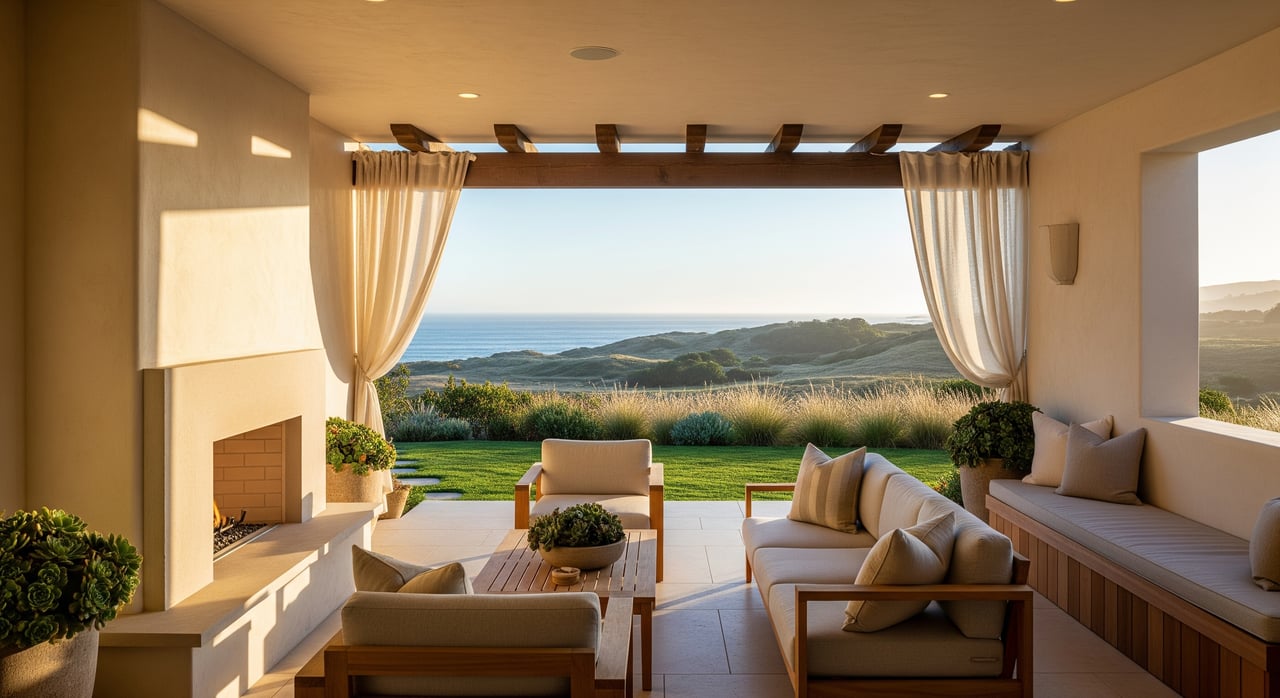
Second‑home buyers tend to prefer low‑maintenance outdoor areas with simple, flexible features. Covered dining, comfortable seating, a basic cooking zone, and weather‑resistant furniture are high‑value. Lock‑and‑leave elements like composite decking, corrosion‑resistant hardware, and easy‑care plantings resonate.
Documentation boosts value
Projects that are permitted, engineered as required, and inspected are more likely to be valued by appraisers and buyers. Keep receipts, warranties, and maintenance logs. Clear records help sellers show quality and care, and help buyers understand future upkeep.
Quick planning checklist
Decide your priorities
- Primary uses: dining, cooking, lounging, hot tub, entertaining.
- Seasonality: year‑round shelter or mostly summer shade.
- Exposure: afternoon wind direction, sun angles, privacy, views.
- Materials: corrosion resistance, maintenance capacity, fire risk.
- Utilities: electrical, gas, water.
- Budget range and ROI expectations.
Execution steps
- Confirm setbacks, easements, and zoning with county planning.
- Engage a licensed contractor and, if needed, a structural engineer.
- Submit required permits and schedule inspections for structural and electrical work.
- Use certified installers for gas lines and permanent fire features.
- Save plans, approvals, warranties, and maintenance instructions for disclosures.
Practical tips for Nipomo
- Choose marine‑grade stainless steel fasteners and corrosion‑resistant fixtures.
- Favor composite or metal where you want low upkeep.
- Use a louvered roof or retractable awning with wind sensors for flexible shade.
- Add layered wind buffering with partial screens and evergreen planting.
- Confirm local fire and air‑quality rules before adding a fire feature.
Next steps for buyers and sellers
If you’re refreshing a Nipomo outdoor area to enjoy now and sell later, focus on shade you can control, wind‑smart layouts, and coastal‑ready materials. Keep permits and warranties on file to boost buyer confidence. If you own a second home or an investment property, aim for low‑maintenance selections that hold up in salt air and daily breezes.
You do not have to plan it alone. The Franklin Team blends local market knowledge with practical guidance on what resonates with Central Coast buyers. Whether you are weighing upgrades before listing or considering a home with a deck and pergola already in place, we can help you focus on the features that add comfort and value.
Ready to talk outdoor room ROI, listing prep, or purchase strategy in Nipomo? Reach out to The Franklin Team to discuss your goals and Request a Home Valuation.
FAQs
What outdoor shade works best in Nipomo’s afternoon wind?
- Louvered roofs, engineered pergolas with retractable canopies, and retractable awnings with wind sensors perform better than unsupported shade sails on exposed sites.
How do I prevent rust and corrosion near the coast?
- Use marine‑grade stainless steel (316) fasteners, corrosion‑resistant fixtures, and quality powder or marine coatings; avoid mixing metals that can trigger galvanic corrosion.
Which decking materials are lowest maintenance for second homes?
- Composite or capped polymer decking and aluminum systems need the least upkeep, while pressure‑treated wood requires regular sealing and more frequent refinishing.
Can I use a fire pit at a Nipomo property?
- It depends on local ordinances and air‑quality rules; built‑in gas fire pits often require permits, and open wood fires may be restricted, so check current regulations before installing.
Do pergolas and covered patios need permits in San Luis Obispo County?
- Many do, especially if they are structural, elevated, or include electrical or gas; confirm requirements with county planning and consult a licensed contractor or engineer.
How can landscaping help with wind without blocking views?
- Use layered plantings with low shrubs and taller, staggered windbreaks; add partial hard screens to filter wind while preserving light and sightlines.